


Skip to main content Scroll Top
PIPPA Self Managing
  • Home
  • PIPPA Self Managing

Moods

You might find that your mood changes before or during your period and this is often called ‘PMS’ (pre-menstrual syndrome). Symptoms include feeling

irritable
teary
easily overwhelmed
wanting to withdraw
anxious
down or depressed

These symptoms can interfere with school, studies and work performance and also your relationships if you feel grumpy and irritable.

Manage your Moods

Try some of the following suggestions to help manage your moods:
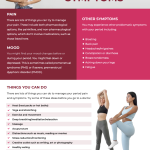
exercise (hot and sweaty is best for releasing great chemicals and improving your mood and energy level)
stress reduction/monitoring (e.g. simplify activities, delay big decisions if possible)
meditation/relaxation/deep belly breathing (with long, slow ‘out’ breaths)
creative outlet such as writing, music, art, craft or photography
distractions such as music, reading, movies or activity you love doing
the supplements mentioned above can help with mood symptoms

Pain and other physical symptoms

There are lots of things you can try to manage your pain. These include both pharmacological options like painkillers, and non-pharmaceutical options, which don’t involve medications.

Popular non-pharmacological options you can try to help manage your symptoms include:

heat (heat packs or hot baths)
yoga
exercise, movement and stretching (this flushes out inflammatory chemicals and releases endorphins – the body’s natural painkillers)
meditation/relaxation/deep belly breathing (with long, slow ‘out’ breaths)
massage
magnesium for muscle cramping pain (including cramping of the uterus [womb] with periods) – can be taken as an oral tablet or powder, or sprayed onto your skin
distractions such as music, reading, movies, hobby or activity you enjoy doing
managing your stress levels (as stress increases inflammation and pain in the body)
avoiding inflammatory foods such as sugars, gluten or anything that your body doesn’t tolerate so well at the time of your period
eating healthy, nourishing foods
getting enough sleep and rest

TThe above options will help manage the symptoms. There are also supplements available that are designed especially for menstrual symptoms that contain magnesium, pyridoxine (also known as Vitamin B-6) and/or Vitex agnus-castus (also known as Chaste tree). However, effectiveness varies from one person to another and being on hormone medication like the pill (COCP) can also alter the effectiveness of these. You can discuss use of these with a qualified health practitioner or pharmacist.

What’s next?

We have developed a self-management pathway (HTML version) self-management pathway [PDF 1.03MB] that you can use to help you manage your period pain and symptoms. You can also use a period tracker app to monitor your pain and symptoms to see which symptoms are most bothersome and which actions help.

In many cases, the suggestions on this web page and in the self-management pathway will help you manage your pain and period symptoms.

However, if you get minimal improvement with managing your pain symptoms yourself, are concerned about your periods or have a high PIPPA score, you should consult a healthcare professional such as your school nurse, school counsellor or GP. We have developed a Primary Health Care pathway (HTML version) Primary Health Care pathway [PDF 816kB] which you can take with you, and a Note for your doctor [PDF 227kB] to help you with these conversations.